
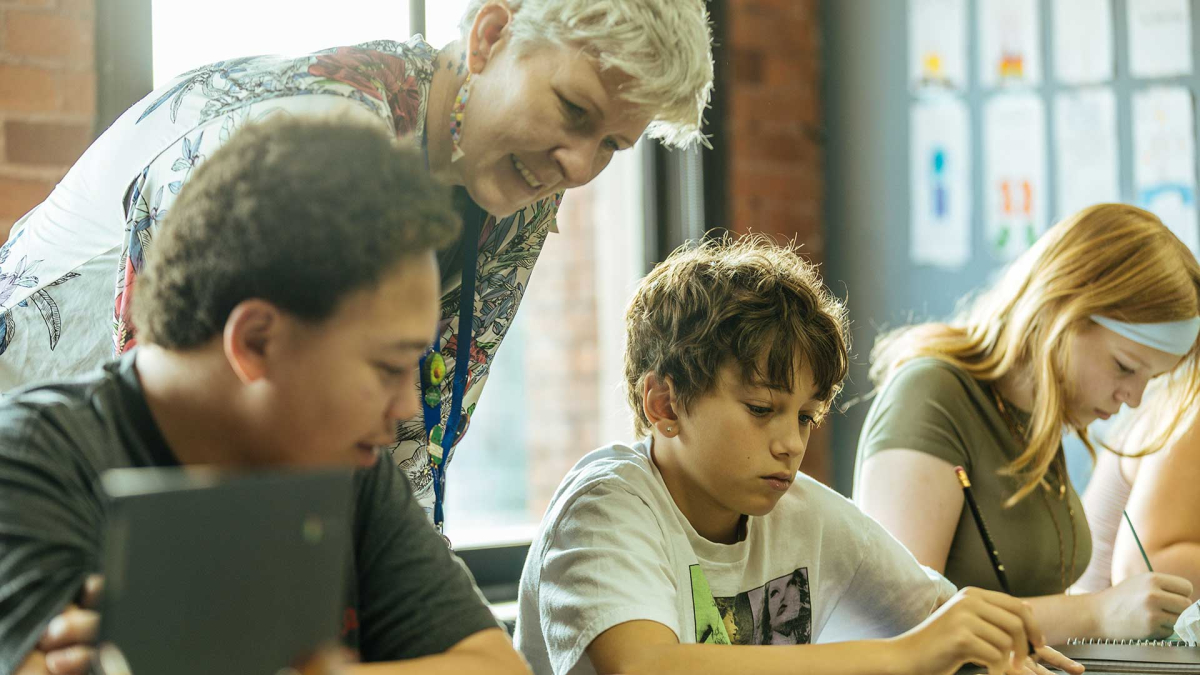
Most schools claim to care about the "whole child." Very few have a dedicated, daily program designed specifically to develop the person behind the student. At Templeton Academy Nashville, Core Advisory isn't a homeroom period with morning announcements. It's one of the three foundational pillars of a Templeton education — a structured, intentional program where every student is seen, supported, challenged, and known by a dedicated faculty mentor.
Core Advisory at Templeton Academy
In a world where adolescent anxiety, social disconnection, and lack of purpose are rising at alarming rates, Templeton's Core Advisory program addresses something that traditional schools rarely touch: helping students understand who they are, what they value, and how their unique gifts can serve both themselves and their communities.
What Core Advisory Actually Is
Core Advisory at Templeton is built around a single, powerful question: What is your "Why"?
Through daily advisory sessions, students work with a dedicated faculty advisor and a small group of peers to explore their identity, develop self-awareness, and build the social-emotional skills that research consistently identifies as essential for both academic success and personal well-being. This isn't a one-semester elective or an optional add-on — it's woven into every school day and every student's experience.
The program develops five essential durable skills:
- Empathy — understanding and connecting with perspectives different from their own
- Conscientiousness — taking responsibility for their commitments and their impact on others
- Self-Regulation — managing emotions, impulses, and reactions in productive ways
- Perseverance — building resilience to push through challenges rather than avoiding them
- Time Management — organizing priorities and managing the demands of academic and personal life
These aren't abstract concepts discussed in a workbook. They're practiced, modeled, and reinforced through real relationships and real experiences throughout the Templeton day.
How Core Advisory Works in Practice
Daily Structure
Every Templeton student's day includes dedicated advisory time. In Nashville, the high school day begins with a 30-minute Morning Advisory and includes an additional hour of Core Advisory and Office Hours in the afternoon. This daily rhythm means the advisory relationship isn't something that happens once a week — it's a consistent, reliable part of every school day.
The Advisor Relationship
Each student is paired with a faculty advisor who serves as their primary advocate, mentor, and guide throughout their Templeton journey. Because our average class size is approximately 10 students, advisors can invest meaningful time and attention in each relationship. This isn't a counselor juggling a caseload of hundreds — it's a teacher who knows your child deeply and is committed to their growth.
The advisor relationship includes:
- Regular one-on-one check-ins to discuss academic progress, personal goals, and any challenges the student is navigating
- Small-group advisory sessions where students build community, practice interpersonal skills, and support each other's development
- Goal-setting and reflection — students articulate their personal goals and regularly assess their progress, building the self-directed habits that carry through college and career
- Communication with families — advisors serve as the primary point of contact between school and home, ensuring that parents are connected to their child's full experience at Templeton
Developmentally Appropriate Progression
Core Advisory is designed to grow with students across their Templeton years. Middle school advisory focuses on building foundational self-awareness, social skills, and executive functioning habits. As students move into high school, the program deepens into purpose exploration, leadership development, and preparation for the independence that college and career require.
Why Advisory Matters More Than Most Schools Realize
The traditional school model is structured around content delivery: math, English, science, history, repeat. What it often leaves out is the scaffolding that helps young people actually use that content — the self-awareness to understand their own learning, the emotional intelligence to work with others, and the sense of purpose that transforms academic effort from obligation into motivation.
Research increasingly confirms what parents have always known intuitively: students who feel connected to caring adults at school perform better academically, attend school more consistently, and report higher levels of well-being. A 2025 Brookings Institution analysis found that only 39% of tenth-graders reported a strong sense of belonging at school — a statistic that underscores how many students are navigating adolescence without the adult relationships and personal development support that Templeton's advisory model provides.
How Core Advisory Differs from Traditional Homeroom
Many Nashville schools have some version of a homeroom or advisory period. In most cases, it amounts to 10–15 minutes of announcements, attendance, and unstructured time at the start of the day. Here's how Templeton's model is fundamentally different:
Traditional Homeroom | Templeton Core Advisory | |
Time | 10–15 minutes | 30+ minutes daily, plus dedicated afternoon block |
Purpose | Logistical (announcements, attendance) | Developmental (identity, purpose, social-emotional skills) |
Advisor Role | Administrative | Mentor, advocate, guide |
Student Relationship | Superficial | Deep, sustained, and personal |
Curriculum | None or minimal | Structured program: "Find Your Why" |
Skills Developed | None targeted | Empathy, self-regulation, perseverance, time management |
Family Connection | Limited | Advisor is primary home-school liaison |
The difference isn't incremental — it's categorical. Templeton's Core Advisory is a serious, sustained investment in the development of the whole person, and it produces students who are not only academically capable but self-aware, emotionally grounded, and purpose-driven.
Leadership and Personal Development
Core Advisory naturally develops leadership skills — not through a dedicated "leadership class," but through the daily practice of self-awareness, communication, and community responsibility. Students learn to articulate their ideas, advocate for themselves and others, navigate disagreement constructively, and take ownership of their contributions to the school community.
By the time they reach their senior year, Templeton students demonstrate the kind of leadership that colleges and employers value most: the quiet, confident ability to understand a situation, bring people together, and take purposeful action. The project-based learning model reinforces this development, giving students opportunities to lead collaborative projects and present their work to authentic audiences at quarterly exhibitions.
The Impact on Academic Performance
Core Advisory doesn't compete with academics — it amplifies them. When students understand how they learn best, can manage their time effectively, and feel genuinely connected to their school community, academic engagement rises. The durable skills developed through advisory — particularly self-regulation, perseverance, and time management — directly support the executive functioning that academic success requires.
This is especially true for students who have struggled in traditional environments. Many Templeton students arrive having felt disconnected or disengaged at previous schools. The advisory relationship provides the foundation of trust and belonging that allows them to re-engage academically — often more rapidly than families expect.
Frequently Asked Questions
How are students matched with their advisors?
Advisor assignments are made thoughtfully by school leadership, taking into account student personality, interests, and needs. The goal is to create advisory groups where students feel safe, supported, and genuinely known. While advisory groups may shift over time, the culture of the program ensures that every advisor-student relationship is built on trust and investment.
Can parents communicate directly with their child's advisor?
Absolutely. The advisor serves as the primary point of contact between families and the school. Parents are encouraged to reach out to their child's advisor with questions, updates, or concerns — this direct line of communication is one of the most valued aspects of the Templeton model.
How does Core Advisory help with college applications?
Advisors who know students deeply are able to provide context, support, and guidance throughout the college process. They contribute to recommendation letters, help students articulate their personal narratives, and connect the self-awareness developed through advisory to the reflection required in college essays.
Is Core Advisory similar to therapy or counseling?
No. Core Advisory is a developmental program focused on personal growth, self-awareness, and skill-building — not therapeutic intervention. However, the trusting relationships built through advisory often help advisors identify when a student might benefit from additional support, enabling early and thoughtful referrals.
Experience Core Advisory Firsthand
The best way to understand what makes Core Advisory different is to see it in action. Schedule a campus visit to observe an advisory session, meet our faculty advisors, and learn how Templeton's approach to the whole student could benefit your child.
Contact our Nashville admissions team to attend an advisory program information session.
Now enrolling grades 5–12.