
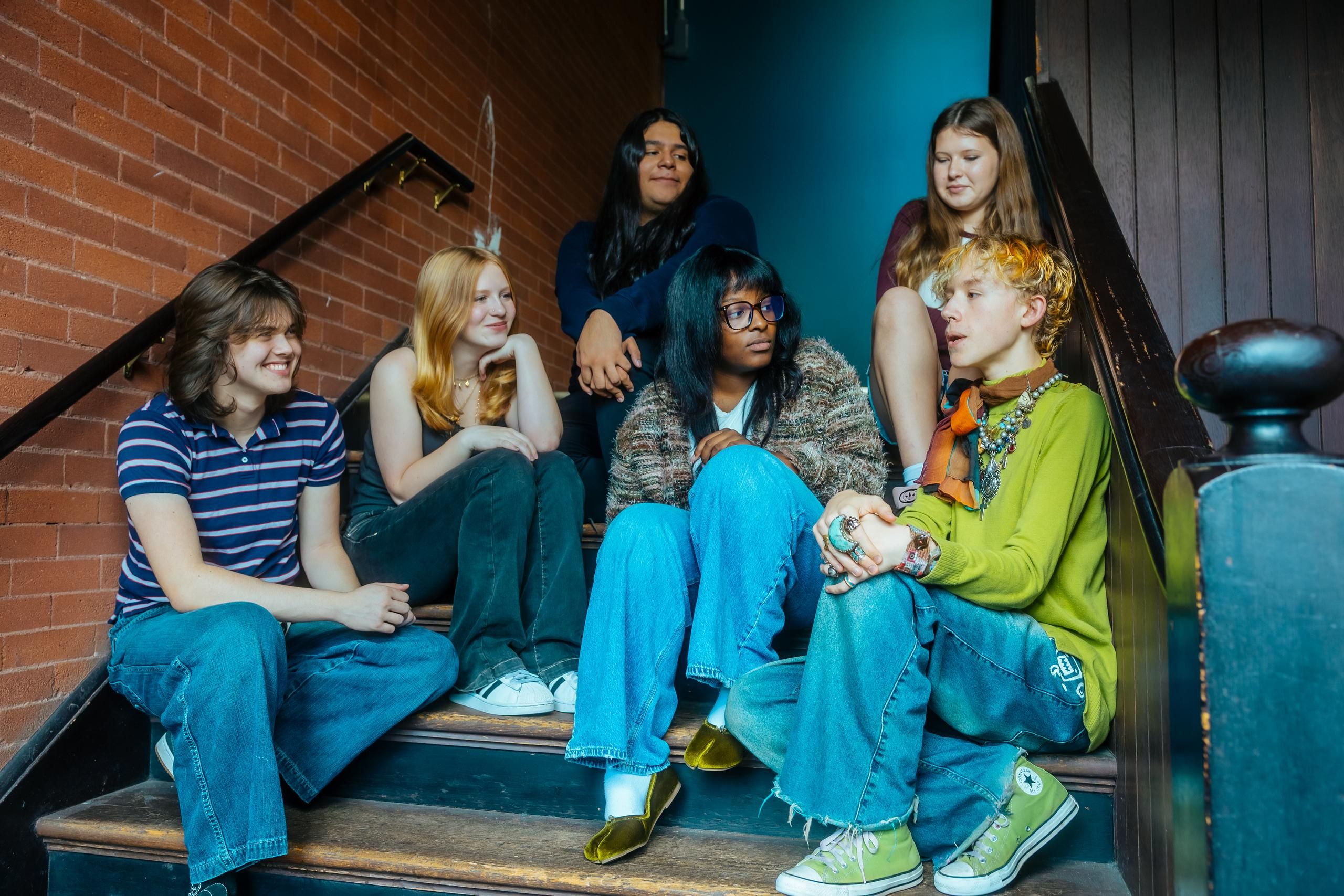
 The world your child will graduate into doesn't reward people who can memorize the right answers. It rewards people who can ask the right questions — who can analyze complex problems, evaluate competing perspectives, and build creative solutions that no one has thought of yet. Critical thinking isn't a nice-to-have skill anymore. It's the foundation of success in college, career, and life.
Yet most schools still operate on a model that prioritizes recall over reasoning. Students learn to identify the correct answer on a multiple-choice test, but they don't develop the ability to think through problems that don't have predetermined solutions. The result? Students who can pass exams but struggle when confronted with the messy, open-ended challenges of the real world.
Developing Problem-Solvers at Templeton Academy
At Templeton Academy Nashville, critical thinking isn't a buzzword on the "About Us" page. It's the explicit, intentional outcome of every learning experience we design — from our project-based curriculum to our Core Advisory program to our Fieldwork in Nashville's downtown community. We're developing the next generation of problem-solvers, and we're doing it with a methodology that's both innovative and proven.
Why Traditional Schools Struggle to Teach Critical Thinking
Most Nashville schools — both public and private — value critical thinking in theory. But the traditional model makes it structurally difficult to develop in practice. Here's why:
Short class periods limit depth. When students rotate through seven or eight subjects in 45-minute blocks, there's barely enough time to introduce a concept, let alone explore it from multiple angles, challenge assumptions, or apply it to a real-world problem.
Standardized assessment rewards recall, not reasoning. When success is measured primarily through tests that ask students to select the correct answer from predetermined options, the incentive is to memorize — not to think. Critical thinking requires evaluation, synthesis, and judgment, none of which are captured by a bubble sheet.
Lecture-based instruction positions students as passive receivers. In a traditional classroom, the teacher holds the knowledge and dispenses it to students. This model trains students to absorb information, not to question it, analyze it, or apply it in novel contexts.
Large class sizes limit meaningful discussion. In a class of 25–30 students, genuine Socratic dialogue — where students question each other's reasoning and build on each other's ideas — is logistically impossible. A few voices dominate while most students remain silent.
Templeton's model was designed specifically to address each of these limitations.
How Project-Based Learning Develops Critical Thinkers
Project-based learning (PBL) is one of the most effective methodologies for developing critical thinking because it requires students to do the intellectual work themselves. Rather than consuming pre-packaged information and reproducing it on a test, students at Templeton engage in authentic, challenging projects with real-world relevance.
Here's how PBL builds critical thinking at every stage:
Problem Definition
Students begin by identifying and framing genuine problems — not textbook exercises with predetermined answers. This requires them to analyze a situation, determine what they know and don't know, and develop a research strategy to fill the gaps.
Research and Investigation
Students gather information from multiple sources, evaluate the credibility and relevance of what they find, identify biases and limitations, and synthesize competing perspectives. This is the analytical core of critical thinking — and it happens naturally within every Templeton project.
Collaborative Problem-Solving
Working in small teams, students must articulate their reasoning, challenge each other's assumptions, negotiate different viewpoints, and build solutions that reflect the strongest thinking of the group. Collaboration doesn't dilute critical thinking — it sharpens it.
Application and Creation
Students apply their learning to produce tangible, original work: policy proposals, scientific research, multimedia journalism, entrepreneurial business plans, literary magazines, or design solutions. This creative application requires students to move beyond analysis and into synthesis — the highest level of critical thinking.
Public Presentation and Defense
At quarterly exhibitions, students present their work to peers, educators, families, and community members. They must explain their thinking, respond to questions, and defend their conclusions — a process that mirrors the way professionals present and defend their ideas in the real world.
Real-World Problem-Solving in Nashville
Critical thinking isn't developed in the abstract — it's built through practice with real problems in real contexts. Templeton's Fieldwork program uses Nashville's downtown location to give students authentic challenges that demand critical analysis:
- Analyzing urban development by studying Nashville's architectural history and growth patterns firsthand
- Investigating civic processes through visits to the State Capitol and local government institutions
- Evaluating environmental systems through scientific observation at Shelby Park
- Researching cultural dynamics by examining immigration, music, and social history throughout Nashville's neighborhoods
- Engaging with industry professionals through partnerships with local businesses and organizations
These experiences develop what educational researchers call "transfer" — the ability to apply thinking skills learned in one context to new and unfamiliar situations. Students who learn to think critically through real-world engagement carry those skills into college classrooms, workplaces, and civic life.
The Critical Thinking Advantage: College and Career Readiness
Colleges and employers consistently rank critical thinking among the most important skills for success. Yet studies suggest that many graduates — even from prestigious institutions — lack these skills because their educational experiences didn't develop them.
Templeton students arrive at college having already practiced the skills their professors expect: formulating original arguments, evaluating evidence, collaborating across differences, and communicating their ideas clearly and persuasively. This is a significant part of why 95% of Templeton graduates are accepted to their college of choice.
Our college and career planning program reinforces this foundation with one-on-one counseling, internship opportunities, and career exploration — all beginning in ninth grade.
Thinking Skills in a Community of 10
Critical thinking flourishes in environments where students feel safe to question, disagree, and take intellectual risks. Templeton's average class size of 10 creates exactly this kind of environment. In a small, supportive learning community:
- Every student participates in discussions rather than remaining a passive observer
- Teachers facilitate genuine dialogue rather than delivering lectures
- Students practice respectful disagreement and learn to strengthen their arguments
- Quiet thinkers have space to develop their voices alongside more outgoing peers
- Teachers provide detailed feedback on students' reasoning, not just their conclusions
The hidden costs of large class sizes extend beyond academic performance — they include the loss of the intellectual community that critical thinking requires.
Frequently Asked Questions
How do you measure critical thinking development at Templeton?
Critical thinking is assessed through the quality of student work across all subjects — the depth of their research, the strength of their arguments, the originality of their solutions, and their ability to respond to questions and feedback during public exhibitions. Our mastery-based approach means students must demonstrate genuine understanding, not just recall.
My child does well on tests. Does that mean they're already a strong critical thinker?
Not necessarily. Test performance often reflects memory and test-taking strategy rather than deep reasoning ability. Many strong test-takers struggle when asked to solve open-ended problems, evaluate conflicting information, or defend an original argument. Templeton's project-based approach develops these skills alongside content knowledge.
How does Templeton's approach compare to traditional lecture-based learning?
Traditional lecture-based learning is efficient for information delivery but limited in developing higher-order thinking skills. Templeton's project-based model flips this: students spend their time analyzing, evaluating, creating, and presenting — the cognitive activities that build critical thinking — rather than passively listening and note-taking.
Is this approach rigorous enough for academically advanced students?
Absolutely. Critical thinking is, by nature, rigorous. Students who are accustomed to earning high grades through memorization are often challenged and energized by the depth of thinking Templeton requires. Advanced coursework options in subjects like environmental science, statistics, and philosophy provide additional intellectual challenge.
Experience Critical Thinking in Action
We invite Nashville families to attend a project showcase or schedule a campus visit to see Templeton's critical thinking curriculum in action. Observe a project-based learning block, watch students present at an exhibition, and meet the faculty who are training the next generation of problem-solvers.
Contact our Nashville team to learn more about our approach and schedule your visit.
Now enrolling grades 5–12.