
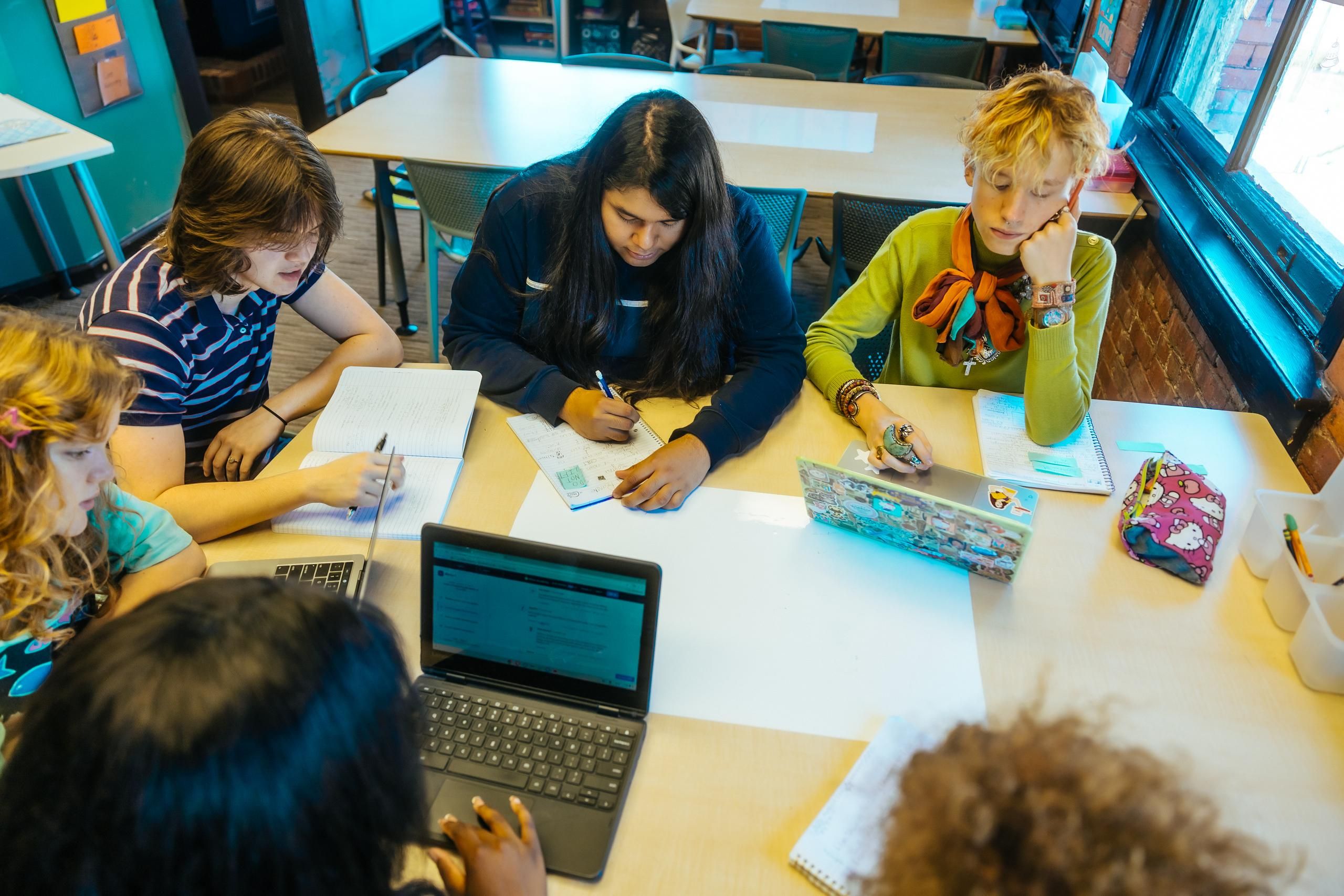
 There's a simple truth that every parent understands: when a teacher truly knows your child, everything changes. The questions get more targeted. The encouragement gets more specific. The challenges get more personal. And your child stops being a face in the crowd and starts being a student who is genuinely seen.
At Templeton Academy Nashville, small class sizes aren't a marketing talking point — they're the cornerstone of everything we do. With an average of just 10 students per class, our teachers don't just know your child's name. They know their strengths, their struggles, their interests, and the unique way they learn best. It's the kind of personalized attention that transforms education from something students endure into something they own.
Why Class Size Matters More Than Most People Think
The research on class size and student achievement is extensive — and the findings are clear. The landmark Tennessee STAR study, one of the most significant educational experiments ever conducted, tracked over 11,600 students across 79 schools and found that reducing class sizes from 22–25 students to 13–17 students increased student achievement by the equivalent of approximately three additional months of schooling (Brookings Institution). Follow-up research showed that those benefits persisted into adulthood, with students from smaller classes more likely to attend college and achieve higher long-term earnings.
But the impact goes beyond test scores. Research published in the Review of Educational Research found that in smaller classes, teachers spend significantly more time on individualized instruction, provide more specific and actionable feedback, and identify learning gaps earlier — enabling more effective intervention before small problems become large ones.
At Templeton, where our average class size is approximately half of what the STAR study defined as "small," these benefits are amplified. With 10 students in a classroom, every child participates. Every voice is heard. Every question gets answered.
What Small Student Classes Actually Look Like
Numbers on a website are one thing. Experiencing the difference is another. Here's what families notice when they visit Templeton Nashville:
- Every student is actively engaged. In a class of 10, there's no hiding in the back row. Teachers facilitate discussions where every student contributes, and extended learning blocks of two hours and twenty minutes give students time to wrestle with ideas rather than rushing through surface-level coverage.
- Teachers adapt instruction in real time. When a teacher notices a student struggling with a concept — or racing ahead — they can adjust immediately. This kind of responsive teaching is virtually impossible with 25 or 30 students in a room.
- Relationships are genuine and deep. Students and teachers build the kind of trust that makes intellectual risk-taking possible. Students are more willing to ask questions, admit confusion, and push themselves when they feel known and supported.
- Collaboration is natural. Small groups form organically, and students learn to work with everyone — not just their friends. This builds the interpersonal skills that matter in college and career.
- Feedback is specific and timely. Rather than receiving a generic grade on an assignment, students get detailed, personalized feedback that helps them grow as thinkers and learners.
How Templeton Compares to Larger Nashville Schools
Nashville families have many school options, but class sizes vary dramatically. Metro Nashville public middle and high schools often have class sizes of 25–35 students. Even many well-regarded Nashville private schools average 15–22 students per class.
Here's how Templeton's 10-student average compares in practical terms:
- In a class of 30: A student might receive 1–2 minutes of individualized teacher attention per 50-minute period.
- In a class of 20: That increases to 2–3 minutes.
- In a class of 10: Each student can receive 5–10 minutes or more of individualized attention — in addition to the benefits of small-group collaboration and whole-class discussion where every voice matters.
The difference isn't incremental. It's transformational — especially for students who have felt lost in large classroom environments where the pace of instruction was set for the middle of the class, and students at either end were left to figure things out on their own.
Teacher Relationships and Mentorship
At Templeton, teachers aren't just instructors — they're mentors. Our Core Advisory program pairs every student with a faculty advisor who serves as their primary advocate, guide, and champion throughout their Templeton journey. Through regular one-on-one meetings and group advisory sessions, students develop self-awareness, set personal goals, and build the social-emotional skills — empathy, conscientiousness, self-regulation, perseverance, and time management — that support both academic and personal growth.
This advisory relationship is only possible because of our small scale. When a teacher is responsible for 10 students instead of 150, they can invest the time and attention that genuine mentorship requires. They notice when a student is having a hard day. They celebrate specific milestones. They help students connect their classroom learning to their personal interests and long-term aspirations.
Personalized Support for Every Learner
Small class sizes enable Templeton to support a wide range of learners within the same classroom environment:
- Students who need additional challenge can pursue advanced coursework, independent study, and personalized project directions that push them beyond standard expectations.
- Students with IEPs or learning differences benefit from internal accommodation plans, extended time when needed, and support for standardized testing accommodations — all delivered naturally within the small-class setting.
- Students transitioning from larger schools receive the individualized onboarding and relationship-building that helps them adjust to a new learning environment with confidence.
A daily Flex period of over two hours provides additional time for students to work individually or in small groups with teacher support, ensuring that most learning happens during the school day rather than being pushed to homework. In fact, Templeton students who use their Flex time effectively typically have only about one hour of homework per evening.
Academic Excellence in an Intimate Setting
Small classes aren't just about comfort — they're about results. Templeton Nashville students benefit from a rigorous academic program that includes integrated humanities, STEM courses, foreign languages, arts and electives, and advanced options in subjects like environmental science, statistics, and philosophy. Our mastery-based approach ensures that students develop genuine understanding rather than simply passing tests, and public exhibitions give them the opportunity to present their learning to authentic audiences.
The outcome? Ninety-five percent of Templeton graduates are accepted to their college of choice — a number that reflects not just strong academics, but the confidence, communication skills, and self-direction that small-class education builds.
Frequently Asked Questions
What is the actual student-to-teacher ratio at Templeton Nashville?
Our average class size is approximately 10 students. This is maintained across both middle school (grades 5–8) and high school (grades 9–12), ensuring that the benefits of personalized attention are consistent throughout a student's Templeton journey.
Will my child get enough social interaction in such a small school?
Yes. Small class sizes create deeper, more meaningful peer relationships — not fewer connections. Students interact with peers across grade levels through Fieldwork, exhibitions, extracurricular activities, and community events. Many Templeton students report that they feel more socially connected here than they did in much larger schools.
How do small class sizes affect college preparation?
Positively and significantly. Small classes develop the skills that colleges value most: independent thinking, articulate communication, collaborative problem-solving, and self-direction. Students also build close relationships with teachers who can write detailed, personal college recommendation letters — a significant advantage in competitive admissions processes.
Is Templeton right for students who are currently struggling in larger classrooms?
Often, yes. Many Templeton students came to us after feeling invisible or disengaged in larger school settings. The combination of small class sizes, project-based learning, and the Core Advisory program has helped numerous students rediscover their love of learning and reach their academic potential. We encourage you to schedule a visit so your child can experience the difference.
See Small Class Sizes in Action
We invite Nashville families to observe a class at Templeton and experience the difference that 10-student classrooms make. See how teachers and students interact, watch a project unfold during an extended learning block, and meet the faculty who are dedicated to knowing every student by name and by heart.
Contact our Nashville admissions team to schedule your visit today.
Now enrolling grades 5–12.