 Middle school represents a crucial period when students develop their identities, build academic confidence, and establish patterns that influence their educational trajectory. For Washington, DC families seeking private middle schools that understand this critical developmental stage, Templeton Academy offers an innovative approach that transforms the nation's capital into an extended classroom while providing the individual attention and support essential for middle school success.
Located in Gallery Place/Chinatown, our middle school program (grades 6-8) serves students through project-based learning that leverages DC's unique resources—museums, monuments, government institutions, and diverse communities—to create educational experiences impossible anywhere else in the country. With small class sizes averaging 10 students and comprehensive Core Advisory support, we address the academic, social, and emotional needs of middle schoolers while building foundations for high school and college success.
For families evaluating Washington DC middle school options or middle schools DC that provide both academic rigor and developmental understanding, Templeton Academy offers the perfect combination of innovative education and personal support in the heart of the nation's capital.
Middle School-Specific Programming
Templeton Academy's middle school curriculum (grades 6-8) integrates academic rigor with real-world relevance, recognizing that adolescents learn best when education connects to their interests and the world around them.
Core middle school programming:
- Integrated Humanities: English and History through thematic investigations developing critical reading, effective writing, historical thinking, and research skills
- STEM Integration: Science, Technology, Engineering, and Mathematics through hands-on investigation and authentic problem-solving
- World Languages: Spanish, French, or Mandarin with focus on communication skills and global citizenship
- Arts and Exploration: Visual arts, performing arts, wellness, and exploratory courses for discovering interests and developing talents
- Core Advisory: Daily mentorship providing trusted adult guidance and consistent peer support during this transformative period
This comprehensive approach ensures students develop academic competence while building confidence and self-knowledge essential for adolescent success.
Washington, DC as Our Classroom
One of Templeton Academy's greatest strengths is our systematic integration of Washington, DC's incredible educational resources into daily middle school learning. Rather than occasional field trips, we use the nation's capital as a living laboratory where students engage with authentic challenges and real-world contexts.
DC learning experiences for middle schoolers:
Smithsonian Institution Partnership
- Museum of Natural History: Students in Middle School Math and Pre-Algebra visit the NASA Information Center exhibit to explore how professional scientists communicate data to the public and compare it to mathematical concepts they're learning
- Research collaboration: Middle schoolers work with Smithsonian researchers on authentic investigations, developing scientific inquiry skills while contributing to real knowledge
- Cultural exploration: Regular engagement with diverse cultural exhibits connecting to humanities and world language studies
Government and Civic Engagement
- US Capitol visits: Students in Government & Statistics tour the Capitol to analyze how architecture and symbolism reflect American democratic values and lived experiences
- Congressional observation: Age-appropriate engagement with democratic processes helping students understand civic participation
- Policy analysis: Middle school investigations of issues affecting their communities, developing critical thinking about governance and civic responsibility
Monuments and Historical Sites
- Washington Monument studies: Students in Chemistry explore how monuments are protected from lightning while enjoying panoramic city views, connecting scientific principles to iconic structures
- Historical investigation: Using DC's rich historical landscape to understand cause and effect, change over time, and multiple perspectives
- Primary source research: Access to National Archives and historical sites for authentic historical inquiry
These experiences provide context and relevance that transform abstract academic concepts into memorable, meaningful knowledge that serves students throughout their educational journey.
Government and Civics Integration
Washington, DC's unique position as the nation's capital enables civic learning opportunities impossible elsewhere. Middle school students don't just study government—they observe it in action, analyze its structures, and understand their roles as citizens in a democratic society.
Civic engagement for middle schoolers:
Democratic Process Understanding
Students observe Congressional committees, visit government agencies, and engage with policy professionals to understand how democratic decision-making works in practice. This authentic exposure helps them develop informed perspectives on civic participation.
Historical Context and Contemporary Relevance
Using DC's monuments, museums, and institutions to connect historical events to contemporary challenges. Students investigate how past decisions influence current conditions while developing historical thinking skills.
Community Impact Analysis
Middle schoolers research issues affecting DC neighborhoods and communities, learning to analyze problems from multiple perspectives while understanding how policy decisions affect real people's lives.
International Perspective
Engagement with embassies and international organizations providing global context for civic learning. Students understand American democracy within broader international frameworks while developing global citizenship competencies.
This systematic civic engagement helps students develop the critical thinking, communication skills, and civic awareness essential for engaged citizenship and future leadership.
Small Class Advantages in Middle School
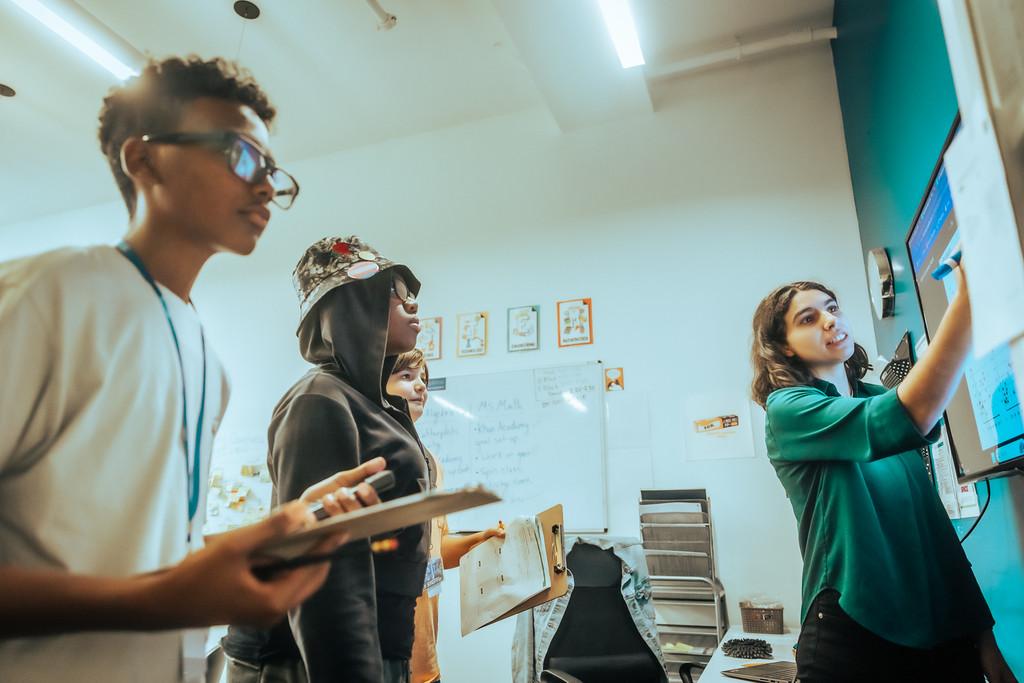
Middle school students particularly benefit from small class environments where they feel known, valued, and academically challenged. Templeton Academy's average class size of 10 students ensures individual attention is impossible in larger settings while creating supportive peer communities during this socially complex developmental period.
Small class benefits for middle schoolers:
Individual Academic Support
- Personalized instruction: Teachers adapt teaching methods and pacing based on each student's learning style and academic needs
- Immediate feedback: Regular one-on-one conferences about academic progress and personal growth
- Skill development: Targeted support for developing study habits, organization, and executive function skills crucial for adolescent success
- Confidence building: Safe environment for intellectual risk-taking and authentic expression without fear of peer judgment
Social-Emotional Development
- Peer relationships: Small groups enable authentic friendships and reduce negative social dynamics common in larger middle school environments
- Leadership opportunities: Regular chances to lead discussions, present work, and mentor peers
- Teacher mentorship: Strong adult relationships providing guidance and advocacy during challenging adolescent years
- Community belonging: Sense of membership and value within the school community
College and High School Preparation
- Discussion skills: Regular participation in seminar-style conversations preparing students for high school and college-level engagement
- Research competence: Authentic investigation projects developing skills essential for advanced academic work
- Communication abilities: Frequent presentation opportunities building confidence and competence
- Self-advocacy: Learning to communicate needs, seek help, and take ownership of learning progress
This personalized attention helps students navigate middle school challenges while building the competencies and confidence essential for high school success.
Transition Support from Elementary School
The transition to middle school can be overwhelming. Templeton Academy provides comprehensive support ensuring students feel prepared and confident.
Transition support includes:
- Academic preparation: Skill assessment, study skills instruction, and gradual independence building
- Social-emotional support: Core Advisory orientation, school culture immersion, and peer connection opportunities
- Project-based learning introduction: Understanding methodology, developing collaboration skills, and appreciating real-world connections
- Family communication: Regular updates and guidance for parents navigating middle school changes
This support ensures students enter middle school feeling prepared and confident rather than anxious and overwhelmed.
Real-World Project Examples
Middle school students at Templeton Academy engage with authentic investigations that develop academic skills while addressing real community challenges. These projects demonstrate how academic learning connects to contemporary issues and professional work.
Recent middle school projects:
Roman Forum Architecture Project
Students collaborated with the District Architecture Center to create scale models of the Roman Forum, learning architectural design and engineering principles while studying ancient Rome. This cross-curricular investigation connected mathematics, engineering, history, and geography through hands-on construction and presentation.
Community Impact Studies
Middle schoolers investigate issues affecting DC neighborhoods, conducting interviews with residents, analyzing demographic data, and presenting findings to community organizations. These projects develop research skills while building understanding of urban challenges and civic engagement.
Environmental Science Investigations
Students work with local environmental organizations to study urban sustainability challenges, collecting data, analyzing patterns, and proposing solutions. These authentic investigations develop scientific inquiry skills while contributing to community understanding.
Cultural Documentation Projects
Working with museums and cultural organizations, students document cultural traditions, immigration patterns, and community changes affecting Washington, DC. These projects develop historical thinking while building appreciation for cultural diversity.
These authentic investigations help students understand how academic learning connects to professional work and community challenges while developing the research, communication, and collaboration skills essential for future success.
Comparison to Traditional Middle School Programs
Many middle school programs struggle to address both academic rigor and developmental needs, often emphasizing test preparation at the expense of authentic learning and personal growth. Templeton Academy's approach provides comprehensive middle school education that addresses the whole child during this crucial period.
Traditional middle school limitations:
- Large classes where individual students may feel anonymous or lost
- Fragmented schedules interrupting deep learning and authentic investigation
- Limited real-world connections and authentic learning opportunities
- Emphasis on standardized testing rather than comprehensive assessment
- Minimal attention to social-emotional development during crucial adolescent years
Templeton Academy advantages:
- Small classes (10 students) ensuring every child feels known and valued
- Extended learning blocks enabling deep investigation and authentic project completion
- Systematic integration of Washington, DC resources providing unique learning opportunities
- Authentic assessment through portfolios, presentations, and real-world application
- Comprehensive Core Advisory program addressing social-emotional needs explicitly
The result is engaged, confident learners who understand their strengths, feel academically prepared, and possess the social-emotional skills essential for high school and life success.
Building Foundations for High School Success
While middle school students naturally focus on immediate experiences and relationships, Templeton Academy builds foundational skills and mindsets that ensure smooth transitions to high school and eventual college success.
High school preparation includes:
- Academic skills: Research, writing, discussion, and critical thinking competencies essential for advanced coursework
- Self-direction: Increasing responsibility for learning goals, time management, and progress monitoring
- Communication abilities: Confidence presenting ideas to various audiences through writing and speaking
- Collaboration competence: Experience working effectively in diverse teams and contributing to group success
- Global perspective: Understanding of diverse cultures and international issues essential for 21st-century citizenship
These competencies develop naturally through project-based learning and small class discussions, creating strong foundations for high school academic and personal success.
Frequently Asked Questions
How does project-based learning work for middle school students?
Middle schoolers engage with authentic investigations that connect to their interests and community challenges. Projects typically last several weeks, allowing deep exploration while building research, collaboration, and presentation skills. Teachers provide scaffolding and support while students develop increasing independence.
What makes DC such an important part of middle school education?
Washington, DC provides learning opportunities available nowhere else: access to world-class museums, government institutions, international organizations, and diverse communities. These resources make learning relevant and exciting while developing cultural competence and civic awareness.
How do you address the social challenges common in middle school?
Small class sizes, consistent Core Advisory relationships, and collaborative project work create supportive environments where negative social dynamics are less likely to develop. Teachers know students well enough to intervene early and help students build authentic friendships through shared academic work.
Will my child be prepared for competitive high schools?
Students develop advanced thinking skills, strong study habits, and self-advocacy abilities that serve them well in any high school environment. Many families choose to continue at Templeton for high school, while others successfully transition to various regional high schools.
Experience Middle School Excellence in DC
For Washington, DC families seeking middle school education that combines academic rigor with developmental support, Templeton Academy offers unique advantages: systematic DC integration, small class attention, and authentic learning experiences preparing students for success in high school and beyond.
Ready to explore middle school at Templeton Academy?
- 6th grade inquiry form: Begin the conversation about your child's middle school needs
- Meet middle school faculty: Connect with teachers who understand adolescent development and project-based learning
- Campus visit: Observe our small classes and DC integration in action
- Student shadow day: Your child can experience authentic middle school learning at Templeton
Contact Information:
- Location: 406 7th St. NW, 2nd Floor, Washington, DC 20004
- Phone: (202) 847-0779
Discover how the nation's capital becomes our classroom and experience middle school education designed to develop confident, capable, and engaged young learners.